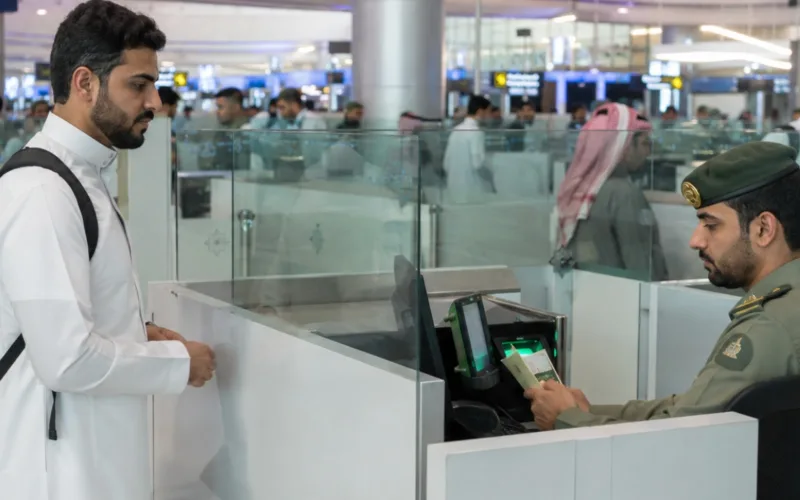
The Kingdom of Saudi Arabia has temporarily suspended entry for travellers arriving directly from the Democratic Republic of the Congo (DRC), Uganda and South Sudan, as well as anyone who has visited any of the three countries within the past 21 days.
The measure, announced on Friday by the Kingdom’s Public Health Authority, applies to all visa categories, including Umrah pilgrimages, tourism, business and work visas. The restrictions are part of heightened public health measures aimed at preventing the spread of the ongoing Ebola outbreak caused by the Bundibugyo virus strain.
For millions of Muslims across East and Central Africa, Saudi Arabia is far more than a travel destination. Home to Islam’s two holiest sites in Mecca and Medina, the Kingdom receives millions of pilgrims annually for Hajj and Umrah. While Hajj is a religious obligation for Muslims who are physically and financially able, Umrah remains a deeply significant voluntary act of worship.
Saudi Arabia has previously imposed similar public health measures during Ebola outbreaks, including restrictions affecting West African countries between 2014 and 2015 and the DRC in 2019, as part of efforts to safeguard pilgrims attending mass religious gatherings.
Beyond religious travel, the Kingdom and the wider Gulf region are major destinations for migrant workers from Uganda, the DRC and South Sudan. Thousands are employed in construction, domestic work, hospitality and other sectors, with remittances serving as a vital source of income for families back home.
The latest restrictions have already disrupted travel plans. Loy Nabacwa, a Ugandan migrant worker based in Saudi Arabia who returned home in May for a two-month leave, told URN that she had been scheduled to return to the Kingdom on Sunday.
However, several of her flights were cancelled following the announcement, leaving her uncertain about when she will be able to resume work. Saudi Arabia maintains diplomatic relations with all three affected countries. Its ties with South Sudan date back to shortly after the country’s independence and include a General Cooperation Agreement, while broader Saudi engagement across East Africa encompasses significant investments in energy, agriculture and infrastructure.
Although these relationships continue to deepen through trade, investment and religious ties, labour rights concerns involving migrant workers have occasionally strained bilateral relations. The travel restrictions are expected to affect thousands of people, including pilgrims who had spent years saving for Umrah or preparing for Hajj, workers returning to their jobs, business travellers and families with relatives in the Kingdom. The ban also applies to travellers attempting to enter Saudi Arabia through third countries after recently visiting Uganda, the DRC or South Sudan. While some lower-risk travellers may be subjected to enhanced screening or quarantine requirements, the core entry suspension remains broadly applicable. Airlines and visa processing agencies are already adjusting their operations, leaving many travellers in limbo.
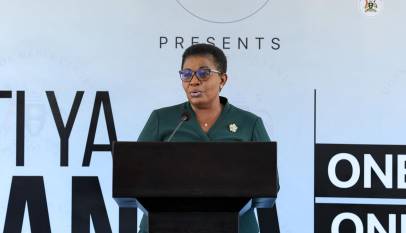
By the time of publication, it remained unclear whether Uganda’s Ministry of Foreign Affairs had received an official communication from the Saudi government regarding the temporary restrictions. Efforts to obtain a comment were unsuccessful, as the Ministry’s spokesperson and Head of Public Diplomacy, Margaret Awino Kafeero, could not be reached by telephone.
The restrictions come as the Ebola outbreak in the region continues to expand. Since it was declared in mid-May 2026 in Ituri Province, eastern DRC, the outbreak has spread into North and South Kivu provinces, fuelled by insecurity, population movement and weak health infrastructure.
As of late June, the DRC had reported more than 1,100 confirmed Ebola cases and approximately 290 deaths. Uganda has confirmed about 20 cases, many linked to cross-border transmission, and recorded a small number of fatalities. South Sudan has not reported any confirmed cases but remains at elevated risk because of its porous borders and frequent cross-border movement. The Bundibugyo strain currently has no approved vaccine or specific treatment, complicating efforts to contain the outbreak.
The World Health Organisation (WHO) declared the epidemic a Public Health Emergency of International Concern (PHEIC) on May 17, 2026. Despite the growing outbreak, WHO Director-General Dr Tedros Adhanom Ghebreyesus has repeatedly cautioned against blanket travel bans and border closures, arguing that such measures often prove counterproductive.
Under the International Health Regulations (IHR), WHO maintains that sweeping travel restrictions can encourage people to use unofficial border crossings, undermining disease surveillance, contact tracing and emergency response efforts while inflicting unnecessary economic hardship. Instead, the agency recommends evidence-based interventions, including robust surveillance, exit screening, contact tracing and community engagement.
While recognising every country’s sovereign right to protect public health, WHO has warned that broad travel bans may weaken international cooperation and disproportionately affect vulnerable populations. Saudi Arabia joins a growing list of countries, including the United States, Canada, Bahrain and the United Arab Emirates, that have introduced temporary travel restrictions in response to the regional Ebola outbreak.