Mpuuga Claims Electoral Process is Opaque Ahead of January Vote
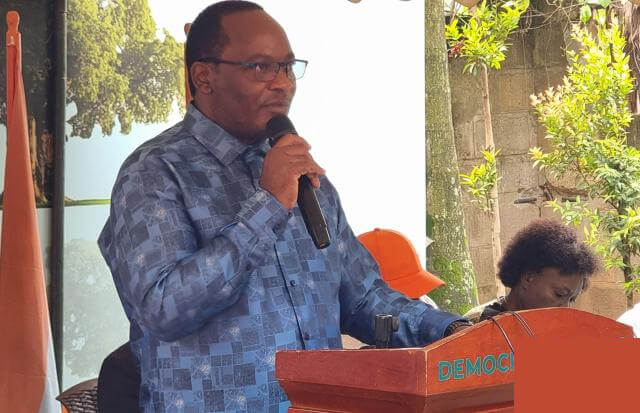
Democratic Front (DF) President Mathias Mpuuga Nsamba has raised fresh alarm over Uganda’s electoral preparedness, warning that the Electoral Commission (EC) is presiding over a flawed and opaque process that could undermine the credibility of the January general elections.
Addressing journalists at a press briefing in Kampala on Wednesday afternoon, Mpuuga said the country is approaching a defining democratic moment amid mounting concerns over the integrity, transparency, and fairness of the electoral process. Mpuuga was presenting a recap of the DF’s first presidential caravan conducted across the greater northern region.
He said the tour was aimed at assessing the performance of party candidates, engaging communities, and critically observing the conduct of the electoral process on the ground. According to him, the tour exposed deep weaknesses in the electoral environment, particularly in rural areas where poverty has fueled widespread voter bribery, intimidation, and manipulation.
He warned that opposition candidates are increasingly vulnerable to disenfranchisement through cash inducements and coercion, questioning whether the EC has the capacity to effectively supervise elections beyond major urban centres. “While electoral activities in Kampala attract heavy scrutiny, vast rural areas remain largely unsupervised, leaving candidates and voters exposed to abuse without an impartial referee,” he noted.
Mpuuga also expressed grave concern over the planned introduction of new biometric voter verification kits expected to be deployed on polling day. While acknowledging the potential value of technology in improving electoral integrity, he said the procurement and rollout of the machines had been conducted in secrecy, without independent audits, parliamentary oversight, or meaningful consultation with political parties and candidates.
“EC has failed to disclose critical details regarding the suppliers, the tendering process, due diligence undertaken and the exact number of machines procured—reportedly more than 100,000 units intended to serve over 21 million voters in a single day.” He further questioned the credibility of the suppliers, citing experiences in neighbouring countries where compromised providers allegedly interfered with electoral systems, triggering political instability.
He warned that technology introduced without transparency poses a serious threat to electoral integrity. Mpuuga also noted that recruitment and training of staff to operate the machines remain incomplete, while voter and civic education has been poorly conducted, selective, and vague—contrary to the EC’s constitutional mandate.
He added that the EC has failed to conduct simulation exercises to test the new system under real polling-day conditions, arguing that such demonstrations are necessary to identify technical failures, build public confidence, and accurately assess voter processing capacity. “Machine breakdowns, slow verification or poor coordination could suppress voter turnout, particularly in opposition strongholds, drawing parallels with previous national exercises where technological failures disrupted public participation.”
The DF leadership further questioned the legal basis for the mandatory use of biometric voter verification machines, noting that no clear law currently authorises their compulsory application. Mpuuga recalled that the Minister of Justice had previously informed Parliament that a relevant bill was before Cabinet but said it has never been tabled, leaving the EC operating in what he described as a legal vacuum.
He warned that unless urgent corrective action is taken, Uganda risks sliding into an electoral crisis similar to disputed elections witnessed elsewhere in the region. Ntebbe Municipality MP Mike Kakembo echoed the concerns, urging the EC to publicly demonstrate how the machines function, including their speed and reliability, to prevent technical glitches that could frustrate voters on polling day.
By the time of filing this report, the Electoral Commission had not responded to the concerns raised by the Democratic Front. Efforts to obtain comment from EC officials regarding the procurement and deployment of biometric voter verification machines, gaps in voter education, and alleged electoral irregularities in rural areas were unsuccessful.
Parliament Okays UGX 7 Trillion Loan For UNOC’s Operations
Mpuuga Claims Electoral Process is Opaque Ahead of January Vote
90 Suspected Criminals Arrested in City Festive Season Swoop
Parliament Okays UGX 7 Trillion Loan For UNOC’s Operations
Mpuuga Claims Electoral Process is Opaque Ahead of January Vote

90 Suspected Criminals Arrested in City Festive Season Swoop
Parliament Okays UGX 7 Trillion Loan For UNOC’s Operations
Parliament has sanctioned UNOC’s plan to borrow USD 2 billion (about UGX 7.11 trillion) fr…
Now On Air – 88.2 Sanyu Fm
Get Hooked Right Here
DON'T MISS!!!
Parliament Okays UGX 7 Trillion Loan For UNOC’s Operations
Parliament has sanctioned UNOC’s plan to borrow USD 2 billion (about UGX 7.11 trillion) from global energy trader Vitol Bahrain.