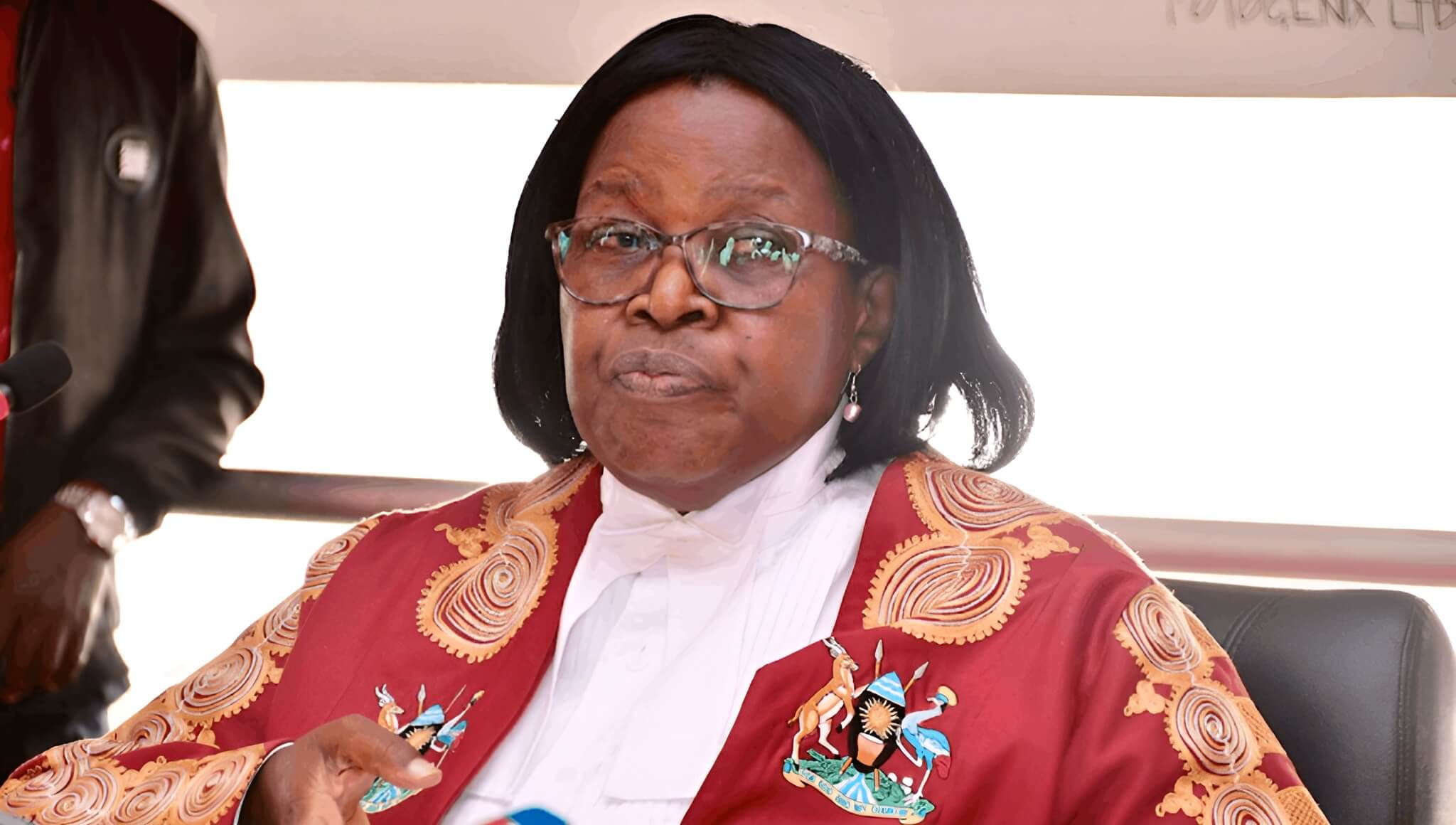
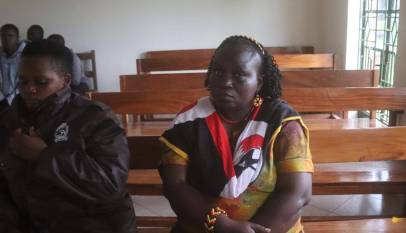
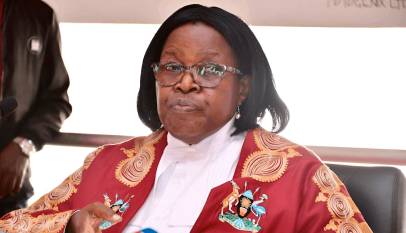
Former Supreme Court Justice Esther Kisaakye has insisted that she is no longer a serving judge and rejects the jurisdiction of a judicial tribunal appointed to investigate her alleged misconduct. “I’m a retired judge. The tribunal has no jurisdiction over me,” said Kisaakye, who says she is currently self-exiled.
The 66-year-old judge is expected to appear before a seven-member tribunal appointed by President Yoweri Museveni to inquire into her conduct following disagreements with former Chief Justice Alfonse Owiny-Dollo and other justices during the 2021 presidential election petition filed by Robert Kyagulanyi of the National Unity Platform (NUP).
The tribunal was appointed after the Judicial Service Commission concluded that a prima facie case had been established regarding alleged misconduct. Justice Kisaakye has indicated she does not intend to appear before the tribunal, arguing that the procedures initiated against her are unconstitutional.
Speaking during an X Space hosted by the Uganda Law Society, she said the Judicial Service Commission and the Chief Justice acted outside constitutional limits.
She also challenged Attorney General Kiryowa Kiwanuka over what she described as advice given to President Museveni that a judge who has attained 60 years cannot voluntarily retire.
“The Attorney General gave advice to the President that a judge who has clocked 60 years cannot resign. That was part of the pressure I faced when I sought to step down. But the Constitution allows for resignation, and no advice should override that right.” It is not clear whether the judicial tribunal of inquiry was still ongoing over one year since it was constituted.
Former Chief Justice, Owiny-Dollo, has not publicly spoken about the matter after he tabled his complaint to the Judicial Service Commission, and even after the matter was referred to the Judicial tribunal of inquiry. The closest he has addressed the matter was when Justice Esther Kisaakye filed an application to the constitutional court. Chief Justice Emeritus Alfonse Owiny-Dollo and the Attorney General asked the court to dismiss the petition. He denied having confiscated her file.
“I have never confiscated, taken possession of, or kept any file belonging to the petitioner. What I have lawfully kept in my chambers to date is a court file that was allocated to the petitioner as a member of the panel. Files allocated to judicial officers remain the property of the Court. I had kept this file and continue to do so to stem a gross abuse of the due process by the petitioner for the reasons set out in the referral made to the 5th respondent/JSC and annexed to the petitioner’s,” adds Owiny-Dollo.
Kisaakye’s disagreements with the judiciary date back to the 2021 presidential election petition. She dissented on procedural applications and clashed with Chief Justice Owiny-Dollo during the proceedings. “I remain ready to defend myself through my lawyers if anyone still believes they have a case, but the law is clear on this,” she said.
Her most notable dissent occurred during the presidential election petition filed by Robert Kyagulanyi, also known as Bobi Wine. Although the main petition was later withdrawn, Kisaakye said she dissented in applications related to the proceedings. “Substantive justice demanded that we give them more time, especially given the reasons that had been given, openly submitted by counsel for Robert Kyagulanyi in court. So I dissented. That was an eight-to-one ruling.”
She said that she believed her judicial oath required her to prioritize substantive justice over procedural technicalities. Justice Kisaakye cited previous election petitions, including that of Amama Mbabazi, where allowances were made to prioritize substantive justice.
“When I delivered my reasoned ruling in the Kyagulanyi versus President Museveni applications, despite my colleagues declining to join me, it led to repercussions for me at a personal level. But I’m proud to have taken the stand that I took, that my duty to the people of Uganda was above paying allegiance to the Chief Justice or any other authority.”
Kisaakye said the main conflict concerned an application by Male Mabirizi seeking the recusal of Chief Justice Owiny-Dollo. Mabirizi alleged that the Chief Justice had met President Museveni while the petition was pending. “Mabirizi brought his application under Article 3 of the Constitution. He challenged the Chief Justice, seeking recusal because there were reports he had met with the President while the petition was pending,” she said.
She stated that all judges who hear an application are entitled to write rulings, even where the application concerns one of their colleagues. “Anyone who has sat in any court knows that if you hear a matter, you are required to make a ruling on the matters that you’ve heard,” she said.
“I think there was a case that involved Justice James Ogoola when he was sitting on the COMESA court. It covered that very issue where Justice Ogoola declined to recuse himself, but the court pronounced itself on the matter.” She dismissed claims that she had met Male Mabirizi during the petition.
“At that time, I was a judge, and I chose to restrict myself from speaking about these matters, hoping that the legal processes in the country would take their course and I would be able to defend myself.”
She said her dissent resulted in actions taken against her within the judiciary. “My files were locked up somewhere in the court building. I realized there was a conspiracy going on.” Kisaakye said the pressures contributed to her decision to leave the country. During the discussion, she also criticized what she described as the selective application of constitutional provisions by political leaders.
“Some members of leadership have chosen to read the Constitution selectively. They take benefit from provisions that give them authority but choose not to read provisions that give rights to Ugandans.” “Those in leadership have taken it a step further to use the legal machinery and the military to suppress voices — the President has used these mechanisms against those who disagree.” She said she is currently living outside the country and noted that she continues to receive her judicial salary.
“They have surprisingly continued to pay my salary. For me, it may be salary, but you are supposed to continue earning your salary as a judge after retirement.” She reiterated that her actions were guided by her oath of office. “My duty was to exercise judicial power in accordance with the Constitution and the laws of Uganda.”
On her pending disciplinary proceedings, the UN Special Rapporteur on the independence of judges and lawyers, Margaret Satterthwaite, in 2023 stated that judges should not face disciplinary action based on the content of lawful decisions.