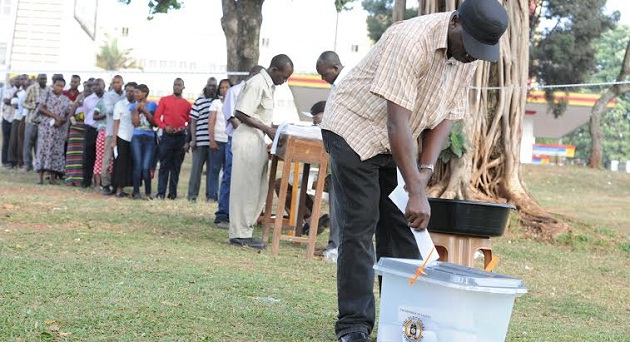
Biometric Voter Verification Kits (BVVKs), the electronic devices used to confirm voter identities through fingerprints and facial recognition, were notably absent from polling stations during Thursday’s Local Council V elections.
At multiple polling stations in Nansana Municipality, Busiro East, Kasangati Town Council, Kira Municipality, Makindye Division, and other polling centres, the kits were missing from ballot boxes during the opening process.
As late as last evening, uncertainty lingered over their deployment, though many in Wakiso had anticipated their use after operators were retained on standby.
“They are not there. But we are going to start voting,” one presiding officer told our reporter. At various polling stations in Makindye Division, polling officials also confirmed that biometric voter verification kits had not been delivered to several polling stations, compelling election officials to rely on manual voter registers, a fallback option permitted under EC guidelines when technology is unavailable. “The biometric voter verification machines have not been provided, and we are going to use the manual hard-copy registers.” Maggie Namagembe, an election official, told Media.
Under the Electoral Commission Act and related electoral regulations, voting is required to begin at 7:00 a.m. and close at 4:00 p.m., with biometric verification designated as the primary method for voter identification.
However, the law allows for manual verification where technology fails, provided the integrity of the process is upheld. In the presidential and parliamentary elections held last week, there were widespread technical challenges involving BVVKs, which caused delayed starts, long queues, and voter anxiety in several parts of the country before the Electoral Commission chairman, Simon Mugenyi Byabakama, issued an order allowing for manual voting across the country.
Earlier on Wednesday, Electoral Commission Spokesperson Julius Mucunguzi said he could neither confirm nor deny whether biometric kits would be fully deployed for the district and city local government elections, citing ongoing logistical assessments.
Meanwhile, polling materials arrived late at some stations, but by 9:30 a.m., the majority visited had received them.
However, voting was delayed at many locations due to the failure to have the mandatory 10 voters required to witness the opening of the box and commence proceedings.
At some polling stations, presiding officers were forced to open the black boxes containing the voting material without the mandatory 10 witnesses, when it became obvious that it was impossible to have these witnesses.
Muzamilu Kakooza, a resident and local leader in Nansana, described the frustration: “What was amusing is that as we waited for the ten, even the few who came got tired and left. People will be very few. If at all they show up, they might come late in the afternoon.”Bridget Nanungi, a resident of the 7/8 Ocheng Zone and agent for one of the candidates, echoed the same, pointing to widespread disinterest. “People seem they are not to be interested. Now, if they didn’t come for the presidential election, what did you expect today?” she asked rhetorically.
Low turnout is a recurring feature of local government elections, which typically draw far fewer participants than presidential or parliamentary races. This pattern appears amplified following the January 2026 presidential election, which recorded the lowest national voter turnout since the return to multiparty politics in 1996, which was approximately 52.5% of registered voters.
With such evident voter apathy, agents and observers at various stations predicted candidates would resort to aggressive mobilization tactics.
“By the looks of things, candidates will be required to go house to house to ferry voters,” one youth remarked to a group gathered near Nansana Division headquarters, playing pool.
Others in the discussion agreed, noting that such efforts often involve significant spending on transport and small incentives like “soda” (bribe) for voters. “Whoever ferries more voters will win,” they concluded.
While the EC maintains that biometric verification is critical in preventing multiple voting and impersonation, opposition parties and civil society organisations have repeatedly criticised what they describe as persistent gaps in electoral preparedness, particularly in urban constituencies.