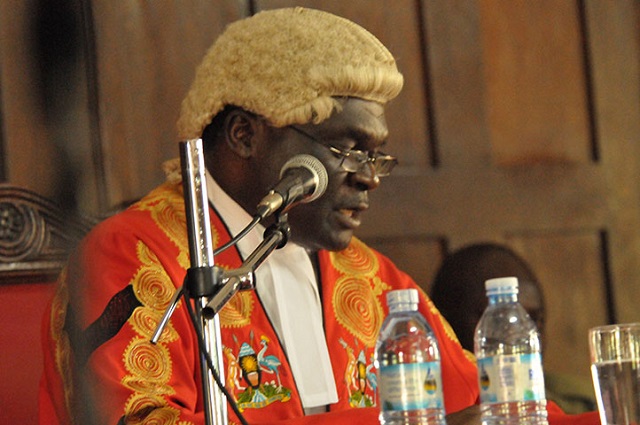
Today, Uganda’s Chief Justice, His Lordship Alfonse Chigamoy Owiny-Dollo, retires at the age of 70, concluding a legal and public service career spanning over forty years.
Appointed Chief Justice in August 2020, he oversaw reforms aimed at improving access to justice, reducing case backlogs, and modernizing court operations. Before becoming Chief Justice, Owiny-Dollo served as Deputy Chief Justice and head of the Court of Appeal/Constitutional Court, and previously as a High Court Judge.
He spent more than two decades in private legal practice, handling litigation, conveyancing, and advisory work, and is recognized for delivering the landmark judgment in the 2010 Kampala terrorist bombings case.
His public service has included roles as a Member of Parliament, a Delegate to the Constituent Assembly that drafted Uganda’s 1995 Constitution, and a government minister. He also engaged in peacebuilding initiatives, including a six-hour meeting with Joseph Kony in the DRC.
Upon taking office, Owiny-Dollo launched the Judiciary Transformation Agenda (2020–2025) to address long-standing challenges such as case backlog, limited access to justice, staffing gaps, and outdated infrastructure.
Under his leadership, the courts increased case disposals, established new High Court Circuits and magistrates’ courts, and completed major infrastructure projects, including the Supreme Court and Court of Appeal Towers.
He championed digitization through an electronic case management system, promoted culturally accepted dispute resolution mechanisms, and strengthened judicial human resources.
Despite these achievements, challenges remained. Judicial funding, though increased, fell short of demand, and backlogs continued to grow in the face of rising caseloads. Regional insecurity, poor road networks, and incomplete implementation of some court decisions also constrained access to justice.
Owiny-Dollo presided over high-profile cases, including the 2021 Presidential Election Petition filed by Robert Kyagulanyi Ssentamu against President Yoweri Kaguta Museveni, and rulings on the jurisdiction of UPDF courts over civilians.
Some have praised him for some of the judgments he has delivered, including the one in which he ruled against the trial of civilians at the UPDF’s Court Martial.
The court ruled that Court Martial lacked jurisdiction to try civilians. The Supreme Court’s rulings were widely acclaimed. Some praised the Chief Justices and other justices of the Court for gathering the courage to rule against a section of the UPDF Act in a constitutional petition by former legislator Michael Kabaziruka.
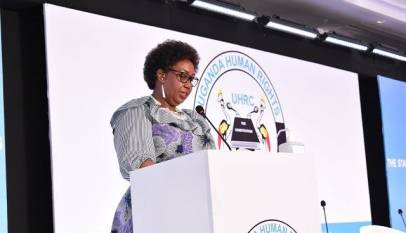
Former Uganda Law Society President, Senior Counsel, Francis Gimara, while delivering a keynote address at the 8th Memorial Lecture in honor of Benedicto Kiwanuka.
“To honor Benedicto Kiwanuka’s legacy, we must defend justice. In our current context, this means we should be very deliberate in fostering a culture of civic courage. And by so doing will be truly honouring him,” said Gimara. In essence, Gimara seemed to praise the outgoing Chief Justices and other justices for being courageous
The Chief Justice, Owiny-Dollo, disagreed with Francis Gimara that judges needed courage to rule on any matter before them.
“I doubt that Benedicto Kiwanuka was courageous. If it requires a judge to be courageous to render justice, that is very dangerous. To my understanding, Chief Justice Benedicto Kiwanuka was a conscientious person. A man who stood by his oath, which are the principles that govern the exercise of judicial mandate,” he said,
“My young brother has cited the Kabaziruka case. I can speak for myself. I never required even an iota of courage to interpret the Constitution vs the UPDF Act as amended and to come out with the decisions which I made. No courage at all,” he said.
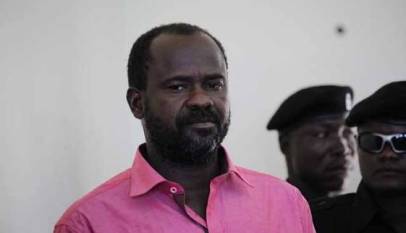
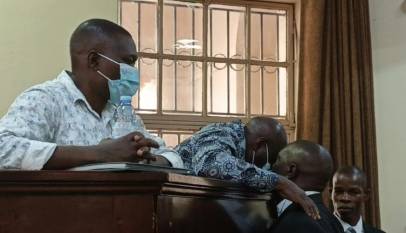
For Isaac Ssemakadde, “People said it was a stellar judgment,” he said. “But what did it turn around?” Has it been implemented?” he asked. “Why did he wait for us to strike, for us to bang the table, to issue a decision that lower courts had issued years earlier?” asked Ssemakadde.
The Chief Justice Emeritus, as he may soon be referred to, has again stated that one of the gravest things that may have happened during his tenure is the frosty relations between the Bar and the Bench.
His tenure was marked by tensions with the Uganda Law Society. Isaac Ssemakadde, former ULS President, raised concerns about delayed case dispositions, inconsistent trials, and administrative interference.
Senior Counsel John Mary Byamugisha documented these issues at the 25th Annual Judges’ Conference in February 2024, noting: “Our main concern is that cases take too long. To the extent that we cannot advise our clients. You cannot predict when the case will commence and when it will end. At the same time, you cannot predict when it has commenced, whether the trial will be consistent, and when to expect the judgment.”
Owiny-Dollo addressed criticisms in two broad counts. Count One involved the alleged Bar-Bench friction, particularly the strained relationship with Ssemakadde.
“One of the gravest things that may have happened during my tenure is the frosty relations between the Bar and the Bench. And we respond in like manner; there is only one loser. The Judiciary will not lose. Individuals in the Uganda Law Society will lose. I hope it doesn’t come to that,” he said.
“Is it because I’m the Chief Justice…many of us here…The Chief Justice is a member of the Uganda Law Society. I was a member of the Executive Committee. Look at your record. I have never heard anywhere in the world anybody given a medal for abusing others.”
“The Ball is right at your goal post. You either take it or you allow it to get to your net. That is my challenge. I think that is the gravest thing that has happened during my tenure as Chief Justice of Uganda. It has never happened before.”
The tensions culminated in the departure of Ssemakadde from Uganda. Some in the legal fraternity, including senior counsels Freddy Ruhindi and Elly Karuhanga, described this as a low point in the Chief Justice’s tenure.
It was hoped that close associates like Ambassador Olara Otunnu and Norbert Mao would reconcile the parties, which were unsuccessful. Owiny-Dollo leaves behind a judiciary strengthened in technology, infrastructure, and independence.
Justice Owiny-Dollo has promised to champion the Alternative Dispute Resolution form of justice while in retirement. The Esther Kisakye and Uganda Law Society cases could be the starting point for him. As an intellectual, he has equally stated that he doesn’t take personal grudges.
On count Two, Owiny-Dollo faced accusations of excessive closeness to the Executive, with critics claiming that his relationship with President Museveni compromised judicial independence.
“Some may claim that the judiciary has been ‘captured’ by the Executive. That is nonsense. It is simply that a stubborn Chief Justice, speaking truth to power, has ensured that the judiciary is recognized for its rightful role,” he stated.
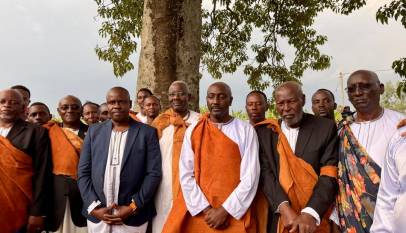
“Again, that was the wheel of destiny turning. I never cried, nor did I resent being appointed minister. The Lord had other plans for me. He guided your mind, President, showing that I could contribute meaningfully to your government. That is how I became Chief Justice,” he said at a thanksgiving ceremony in Agago.
He was appointed to the office of Chief Justice in August 2020, to replace Chief Justice Bert Katureebe. “You entrusted me with a mission. Today, I want the people of Uganda to know: while I have led the transformation of the judiciary, it is ultimately the President who has empowered this change,” he stated as President Museveni looked on.
Yet, Owiny-Dollo has stated that he has been stubborn. “Truly stubborn, because when I believe in something, I stand firm. For example, the judiciary budget had been stagnant at 198 billion for years. We argued that, as the third arm of government, the judiciary deserved more. You listened. Today, the judiciary budget is 450 billion, an increase driven by your support and our persistence. These resources have enabled discernible improvements in the functioning of the judiciary.”
He went on to remind Museveni about the unfulfilled pledge not to him, but to the Judiciary.
“You promised that, in three years, the judiciary would reach parity with Parliament at 800 billion. COVID delayed that, but I believe my successor will achieve it. As long as you remain President, I am confident the judiciary will reach this milestone. We are no longer just a “consuming institution”; our contribution to Uganda’s socio-economic development and stability is significant. We stand as one of the three pillars that hold this country together.
Reflecting on his service, he said: “I thank God for the gift of life and the opportunity to serve. My wealth lies in the people of Uganda, in the communities I have served. Our work in the judiciary has made a tangible difference, and the journey continues.”
Justice Owiny-Dollo retires as Uganda awaits the appointment of a new Chief Justice. Lady Justice Professor Lillian Tibatemwa, the most senior judge, has recently chaired Supreme Court sessions.