Leader of the Opposition (LOP) Joel Ssenyonyi has demanded that the Ministry of Justice and Constitutional Affairs urgently table long-promised regulations governing the use of Biometric Voter Verification Kits (BVVKs) ahead of the January 15, 2026, general elections.
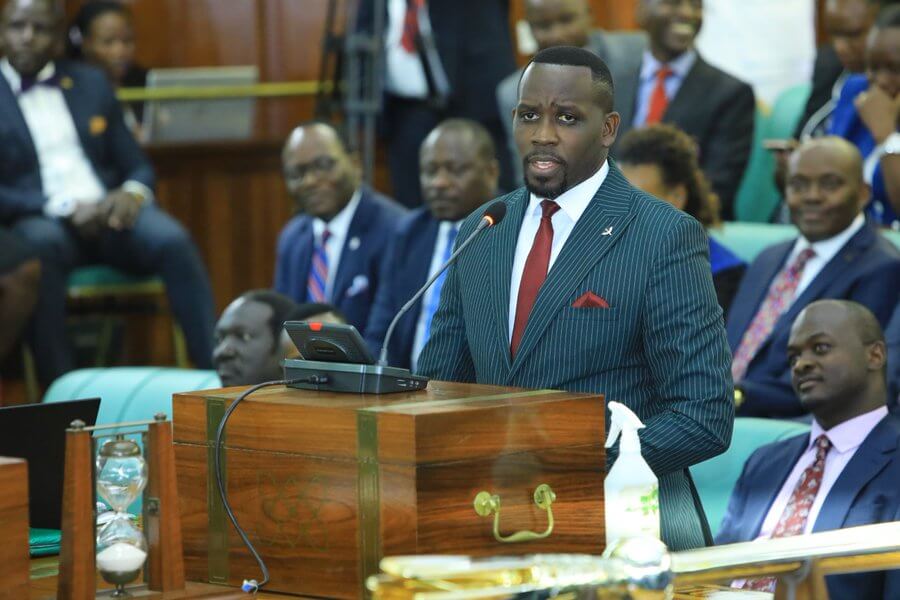
Raising the matter during Tuesday’s plenary sitting, chaired by Speaker Anita Among, Ssenyonyi said Minister of Justice and Constitutional Affairs Norbert Mao pledged in April 2025 to issue statutory instruments guiding the deployment, malfunction protocol, and legal implications of the biometric machines. He noted that nothing has been presented to Parliament, yet the election is only weeks away.
Ssenyonyi warned that without a clear regulatory framework, the Government or the Electoral Commission (EC) could “arbitrarily cancel voting in opposition strongholds” in the event of machine failure. “We have one month to the election, and the minister who sought supplementary funding to procure more biometric kits promised to bring regulations. They have not come,” Ssenyonyi said.
“Now we hear a presidential candidate, President Yoweri Kaguta Museveni, saying that where these machines fail, voting will not happen. I want the Government to clarify this. In 2021, we saw network failures across Kampala and other areas. If they say these machines must be used mandatorily, what happens when they fail?” He insisted that without written rules, “the process risks manipulation and confusion.”
Attorney General Kiryowa Kiwanuka dismissed Ssenyonyi’s concerns, citing the Electoral Commission (Adoption of Technology in Elections) Regulations, SI No. 1 of 2021, which already govern the use of technology in elections. “The use of biometric technology is provided for in existing law,” Kiwanuka said.
“Section 12 of the Electoral Commission Act empowers the Commission to postpone or halt an election in any area if circumstances warrant it. You have sufficient legal infrastructure to run these BVVKs.” He added, “I have not seen any official communication from the President directing that voting must stop if a machine fails. A candidate cannot determine how elections are conducted.”
Kampala Central MP Muhammad Nsereko disagreed, saying the law does not explicitly outline what should happen at polling stations where biometric verification fails. “We remember the last election, the EC allowed fallback to the manual register when machines collapsed,” Nsereko said. “Unless we legislate and embed that guidance clearly, we shall be exposed to contestation.
Speaker Among urged MPs to rely on documented evidence. “If the candidate indeed said voting should stop where machines fail, let that be brought in writing,” she ruled. Without specifying a timeframe, she directed that Minister Mao be summoned to respond to the concerns raised.
Meanwhile, the Electoral Commission has moved to reassure the public. Chairperson Justice Simon Byabakama has repeatedly stated that the biometric machines are intended to “enhance transparency,” not eliminate the manual register.
“They reinforce credibility at every polling station, but the manual register remains a legal safeguard,” Byabakama said, citing Section 33(1)(a) of the Presidential Elections Act and Section 30(1)(a) of the Parliamentary Elections Act, both of which require a physical voters’ roll.
The EC has procured 109,142 BVVKs, receiving the first batch of 60,000 on October 28, 2025, and the remaining 49,100 from China on November 29, 2025. Byabakama said the Commission will soon conduct a public demonstration of the machines “to clear doubts and build confidence among all stakeholders.”
Uganda heads into the 2026 polls with 21,681,491 registered voters following a nationwide update. Of these, men constitute 10,334,362 (47%) and women 11,347,129 (53%), with a total of 50,739 polling stations nationwide. A total of 83,597 candidates have been nominated for 45,505 elective positions. Fresh nominations in constituencies where candidates died are set for November 27–28, 2025, under Section 13 of the Presidential and Parliamentary Elections Acts.
Polling will run from January 15 to February 6, 2026. Ballot paper printing is underway through a mix of international and domestic firms, including Al-Ghurair (UAE), Uniprint (South Africa), Inform Lycos (Greece), Sintel Security (Kenya), Graphics Systems, and Peak Fair (Uganda). Political parties have been instructed to submit agents to witness the arrival and secure handling of election materials, as required under Section 47 of the Presidential Elections Act.
As Uganda prepares for its largest and most technologically driven election, Parliament remains divided over whether the existing legal framework on biometric verification is sufficient or whether new regulations are urgently needed to prevent confusion, malpractice, or voter disenfranchisement. The coming weeks will reveal whether the Ministry of Justice fulfills its promise and whether the EC can address growing concerns before polling day.